
Use logic modeling to check your assumptions

February 13, 2010

If you're new here, you may want to subscribe to my RSS feed, or sign up for my newsletter ==>
to receive the free Change Starts Here Workbook. Thanks for visiting!

Yesterday I attended a meeting of the Association for Strategic Planning Atlanta chapter.  The presenter was Tom Chapel, Chief Evaluation Officer for the Centers for Disease Control and Prevention.  His job is to make sure all the programs designed and implemented by the CDC actually cause the results they are intended to cause.

The example he used during the presentation was a program to reduce lead poisoning in children.  In his core diagram were the activities done by the CDC and others in the community, such as Conducting Screenings, Identifying Children with Elevated Lead Levels, and Training Parents.  These were all the things under the control of the CDC and its partners.

On the right side of the diagram were all the intended outcomes the activities were expected to influence, such as Changes to Cleaning Habits, and Reduced Lead Levels.  One of the shorter-term results was a change in at-home behaviors of parents, and the longer-term effects were the health benefits.  Each of the activities and outcomes were connected by arrows in cause-and-effect linkages.  He called the diagram a logic model, since it showed the assumptions, or logic, behind how the program was expected to work.

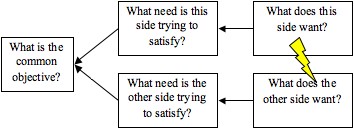
The generic logic model looks like this:

logicmodel

The same type of diagram can be used to model the expected outcomes of organizational change activities (in fact the speaker mentioned that the CDC has done logic models for internal initiatives like diversity and leadership development).  The Control side would contain all the activities you are implementing, such as various communication vehicles, incentives, and training programs.  On the Influence side would be all the behaviors, attitudes and culture changes your activities are expected to elicit.

Once you create the logic model, you can test your assumptions.  Will Activity A really cause Behavior B?  What reinforcements might be required?  What other factors might stand in the way? In his presentation, Mr. Chapel said to look for where the miracles are supposed to happen and unravel them.

The purpose of the logic model is to gain clarity about the relationship between activities and their intended effects.  Over time, by measuring the activities and outcomes, you can test the logic model to see if it’s true.

What are your assumptions about how your change initiative will create its intended outcomes?

Ten Essential Tools for Change Agents

February 2, 2010

Change agents are individuals within organizations who influence change without having direct authority over people who are going through the change.  The following are ten things that effective change agents use to influence change in their organizations. Read more

Introducing the INflux Change Agent Network!

November 30, 2009

Introducing a new program for 2010 to help you influence change without authority:

influx header

Implementing organizational change is an uphill battle.

Studies show that only 30% of change initiatives meet expectations. When a change agent is involved, the success rate actually drops. The reason? Change agents have the difficult task of implementing change without actually having direct authority over the people going through the change.

rolling boulder uphillWhether you are executing strategy, implementing technology, designing process improvements, or transforming culture, your role as change agent is fraught with challenges: Convincing people to try new things. Keeping change a priority. Getting leaders to take ownership. Aligning actions towards desired outcomes. Overcoming resistance at all levels. And yet, despite (perhaps even because of) the daunting task ahead, you want to help the organization move forward.

As a member of the Influx Change Agent Network, you will expand your arsenal of influence methods and gain a community of peers to help you push the boulder uphill. Step fully into the role of change agent so you can pull all the pieces together and effectively implement change in your organization.

Download the brochure

Program Details

Members

Members of the Influx community are mid- to senior-level managers or individual contributors who are responsible for implementing one or more change initiatives within their organizations. Examples of change initiatives include but are not limited to:

  • Strategy execution (e.g. Balanced Scorecard)
  • Quality or process improvement (e.g. Lean / Six Sigma)
  • Corporate Social Responsibility
  • Technology implementation
  • Mergers or restructuring
  • Culture change

Working Group Format

As a working group, the Influx community is much more than a training program. Members bring their own situations to the table and work on them over time with a community of practitioners facing similar challenges.

The Network provides a unique combination of training, community, and individual support to help you implement change:

  • In-Depth Training. Monthly webinars examine methods of influence to help you be an effective change agent for your organization.
  • Personalized Support. Your program host provides individual coaching to work through your immediate challenges.
  • Community. In group calls and online discussion boards, participants have many opportunities to learn from each others’ experiences.

Because interaction and trust are key components of the program, the group is limited to 15 individual members.

Learning Topics

The working group focuses on three core areas to help members influence change: clarity and focus, personal influence and structural influence. Each topic includes training, group discussion and exercises. Occasional guest speakers round out the experience.

Program Topics
Clarity and
Focus
Gain clarity around your
initiative and understand
how change works.
Personal
Influence
Build up and utilize your
ability to influence others
on a one-to-one basis.
Structural
Influence
Introduce large-scale
influence strategies to move
the organization forward.

Resources

Upon registration, you will gain immediate access to our online community. Member profiles, session recordings and other valuable resources will be available throughout the program to members only.

The online tools also help you to learn and connect with a community of organization change practitioners through discussion boards and live chat.

boulder top of hillAnnual membership includes:

  • 10 webinar training sessions
  • 12 monthly group support calls.
  • 3 hours of individual coaching (3-6 sessions).
  • Year-round access to online resources.

Program Fee

Annual membership is $2495. Save $350 when you register by December 15, 2009.

sign me up button

Interested but not sure yet that this program is right for you? Please contact me and I will answer any questions you might have.

Pinpoint Communication Clinic

August 27, 2009

For individuals who need to influence a broad audience
to implement organizational change:

Do you feel like your change communication is:

Inconsistent?
Overwhelming? Not Being Heard?
Not Enough?
Off Target?
Not Even Started?

The Pinpoint Communication Clinic will show you how to organize the multiple facets of organizational communication so you can get your message to the people who need to hear it.

Join the authors of the Pinpoint Communication Workbook for a series of 2 online sessions where you will:

  • Learn how to avoid pitfalls when communicating for change.
  • Review a straightforward step-by-step process for aligning the audience, the message and the means of communication.
  • Take home a workbook and templates to organize and develop your own communication plan.
  • Try it out for yourself and then regroup a month later with colleagues to share experiences and ask the experts.

Schedule:

Clinic 1
Learn the step-by-step process for developing your communication plan.

Date: Tuesday, September 15, 2009
Time: 2:00 p.m. to 3:00 p.m. Eastern

Homework
Complete the Pinpoint Communication templates for your change initiative.

Clinic 2
Share experiences with colleagues, and ask the experts for advice on how to move forward.

Date: Tuesday, October 13, 2009
Time: 2:00 p.m. to 3:30 p.m. Eastern

Clinic Pricing:
The investment for the 2-session clinic is $149 per person, which also includes the Pinpoint Communication Workbook and companion PowerPoint templates.

Early Bird Special:

Attendees who register by Friday, September 4, 2009 pay $119 per person.

Previous webinar attendees on the Pinpoint Communication process said:

“It’s great when we have presenters who can focus on an issue so immediately relevant. It’s one thing when you can present on a topic of interest to many people, it’s a whole different level when it’s on a topic they can turn around and apply today. I learned a lot from your approach.”

“The communication model presented was simple and it was presented clearly.”

“Generally helpful info and the workbook and slides made it VERY easy to follow the presentation and see how it could be applied.”

“[The speakers] had very rich information. Clearly they understood the topic.”

Register today to learn how to organize your change communication efforts into a straightforward, detailed plan.
Registration for this workshop is now closed.  Disappointed?  Please let me know.  We might just host another clinic in the near future.

The Dance of Change

August 24, 2009

ballroom dance Pictures, Images and PhotosI’ve been thinking about how despite our better intentions, changing organizations is never predictable, and doesn’t perfectly fit into a nice theoretical model the way we wish it would.

As change agents, we frequently Dance in the Moment (a term I learned a few years ago in the CTI coaching program).  While we work toward an envisioned future, we can only handle what is right in front of us, which is constantly shifting based on the reactions to the strategies we’re using to try to influence change.

If you think of the process of change as a dance, you realize it’s a partnership between two entities.  Even if you haven’t taken ballroom dancing classes (or watched Dancing With the Stars), you probably know that each person in the duo has a specific role:  leader and follower.

A few of the moves that the leader does to show the follower where to go are overt gestures that can be observed from the audience.  However, most of the time the follower just seems like she knows what to do next, even if the dance is not choreographed.  For the most part, the dance is a series of subtle nudges by the leader:  a tug of the hand, a slight pressure at the waist that indicate the steps and the direction to go next.

The follower, for her part, responds to the nudges with what she interprets as appropriate movements, and adds her own flair to the dance.  Sometimes the corresponding movements are what the leader intended, and sometimes they aren’t. Depending on the leader’s ability to react quickly, the result can be a seamless transition, or it could be a disastrous fall.  Either way, it is the role of the leader to make the follower look good.

It’s important to note that the dance doesn’t work at all without a third element:  the music.  The nudges by the leader mean nothing to the follower if there is no context, no framework that they share. The music tells the dancers if they are doing the Waltz or the Mambo.  They won’t get very far without stepping on toes if they are performing one of each.  The music also keeps them in step, moving together at the same time.

The analogies of the dance’s leader and follower to the subject of organizational change are obvious.  But the music might be a lot of things.  What do you think?

What role does music play in the dance of change?


If you enjoyed this post, you may also like:

New Free Gift: Change Starts Here Workbook

July 23, 2009

After about six months of giving away the Beyond Buy-in article as the free gift with the newsletter subscription, I recently changed it back to the Change Starts Here Workbook, which it had been until February this year.

The 30-page Change Starts Here Workbook walks you through four steps to clarify your organizational change initiative: assess the current state, define the future state, identify the gap between them, and determine the actions that will move the organization forward.

If you subscribed since then, just send me a note and I’ll send you a link to the workbook.  If you want a preview or more detail about the workbook, you can find it here.

Avoid Scattershot Change: Plan Communication

July 14, 2009

No change initiative can occur successfully without proper organizational communication.  When communicating for change, messages are conveyed to audiences with the purposes of keeping people informed and mobilizing the organization.  Communication is the means to gain attention, educate, and get individuals and groups to take action to move the change initiative forward.

As an internal change advocate for your organization, communication is one of the main tools you use to reach your goal and desired outcome.  Yet, we frequently see people who are responsible for implementing change who use communication in a haphazard fashion, without a solid plan.  The resulting hodgepodge of newsletters, posters and meetings tells a less-than-compelling story of change. Read more

Planned obsolescence of change initiatives

June 24, 2009

Sometimes, it can be hard to forget that the goal of any change initiative is to make itself obsolete.  You want the change to become part of the day-to-day culture and process of the organization. The processes and attitudes that at first engendered resistance are adopted and incorporated into how the business gets done.

Of course, this doesn’t happen overnight.  And you can’t go straight from where you are now to where you want to be.  There has to be a journey.  The key is to not be sidetracked by the process of change.

Kurt Lewin (1890 – 1947) was the first to describe change as a 3-step process:

  1. Unfreezing – dismantling the old way, creating a sense of urgency and a need to change
  2. Changing – a period of transition, challenging the old way but not really knowing what the new way is
  3. Freezing – a returning to a sense of normalcy and comfort, crystallizing the new way

A good example of this is in a case study I wrote called A Roundabout Path to Increasing Employee Suggestions – the roundabout part is exactly what I’m talking about here.

In the case, the three steps could be described like this:

  1. Unfreezing – We started a steering committee separate from the executive team to collect and manage ideas.  We challenged the concept of paying for ideas.
  2. Changing – The steering committee collected ideas, and was proactive in the response and tracking.  We started a weekly newsletter to keep idea-generation and problem solving at the forefront.  Idea submission levels increased dramatically.
  3. Freezing – Managers started holding regular meetings with their direct reports to identify and discuss opportunities for improvement, and to brainstorm on ways to address the issues that came up.  The number of ideas, maintained by managers in a central database, increased even further.

If we had stopped with the centralized suggestion box as the final way for employees to submit suggestions, then we wouldn’t have followed through with the ultimate purpose of the change program:  to increase innovation, not because employees submitted more ideas, but because managers asked for and valued them, and involved their teams in solving business problems.

Bottom line:  It’s important to not get stuck in the change step, and keep in mind the final state and ultimate mindset change that you are going after.  Plan to make your change initiative obsolete.

Inquiry:  What will your organization look like when your initiative dissolves?

This post is also featured at Tenacious Tortoise.

NEW! Pinpoint Communication Workbook

June 11, 2009

pinpointcomm1I’m excited to offer a new workbook in my series of step-by-step organizational change guides. I collaborated with my friend and colleague Monica Nakielski of Harmeda LLC to bring you:

Pinpoint Communication: Plan to Avoid Scattershot Change

Communication is one of the primary tools you will use to bring about change in your organization, and yet we frequently see communication used in a haphazard fashion.  The resulting hodgepodge of posters, newsletters and meetings yield a less-than-compelling story of change.

The workbook walks you though 5 Steps that build on each other.  By the end, you will have developed a complete communication plan, including a schedule and measures of success.

The Pinpoint Communication Kit includes not only the workbook, but also high-quality, presentation-ready MS PowerPoint templates.  Just complete the template with the information you developed in the workbook, and you’re ready to share with your organization.

This practical guide is truly something I wish I had back when I was an internal change agent.  I would have been much more organized and deliberate about how I used communication.  I’m excited that it might help you be more effective as you implement change in your organization.

For more information, a preview, and to purchase the workbook, templates or kit, visit www.enclaria.com/communication/.

Three types of change management methods

March 17, 2009

I was putting together examples of change management methods for a potential client and realized that there are really three types that have different applications:

The first type is the large scale change process.  For example, Lewin’s Unfreeze > Change > Refreeze concept, or John Kotter’s eight-stage method in his book Leading Change.  The large scale change process tells the global organizational steps to take, such as building a sense of urgency, developing a vision, or creating small wins to gain momentum.  They provide guidance and set expectations for how change unfolds effectively in an organization.

The second type is the analysis tool, which helps you decide what needs changing.  Force-field analysis, in which you examine the forces pushing for and against change, is one example.  Gap analysis is another.  The Change Starts Here workbook is an example of an analysis tool that helps you determine what to change.  In general, these tools help you identify or diagnose the barriers you need to overcome, or the strengths on which you should build.

The third type of change management method helps you overcome the barriers to change.  They are situation specific or topical.  For example, using the principles in Patrick Lencioni’s Five Dysfunctions of a Team might help fix an ineffective leadership team.  The Beyond Buy-in workbook provides steps to raise leadership support for your initiative.  These methods are more prescriptive in nature and help you determine how to make specific improvements.  Once you have identified the problem, use these tools to create the small (and not so small) wins.

What tools are you using to manage change?

Please use add a comment to chime in.

If you enjoyed this post, you might also like:

Next Page »

Hear the latest episode of The Change Agent’s Dilemma:

Let’s Connect!

Follow me on TwitterConnect on LinkedInBecome a Fan on FacebookEmail me

Free 30-Page Workbook!

Sign up for the monthly newsletter and get the Change Starts Here Workbook!
Email
First Name
Last Name
See preview. View the privacy policy.