The trouble with vision

September 1, 2009

It’s fairly common knowledge that creating and communicating a compelling vision is important for any change effort.  A well-crafted vision helps align people on a clear path to the future.  The vision gives people direction so that short of any other information they still know where to aim.

The trouble is that organizational change only happens when there is a change in behaviors.  If you want to influence change, you have to figure out what you want people to do, so you can figure out how to get them to do it.

The vision does not tell people what to do; it tells them where they are going.  If you tell a group of people in New York that their destination is San Francisco in three months, left to their own devices they will decide for themselves if they want to fly, drive, bike, walk, or somehow swim.

Of course, you also cannot figure out every task of every person every day that is required to reach the vision.  Not only is it an impossible task, but it would surely end in revolt.

The happy medium that will attain results is to determine the key behaviors of certain individuals.  For example, in Case Study:  A Roundabout Path to Increasing Employee Suggestions, it was assumed at first that the key behavior was to get people to turn ideas into the suggestion box.  It turned out that the key behavior that increased suggestions was to have the managers ask for them.

Once you know the key behaviors that will elicit change in your organization, you can work with those individuals and groups to ensure that they happen (through accountability, incentives, communication, etc.).  Use the vision to give people a sense of direction and purpose, but don’t rely on it to align important consistent behaviors.

What are the key behaviors that will drive change in your organization?

Make your organization road-ready

July 26, 2009

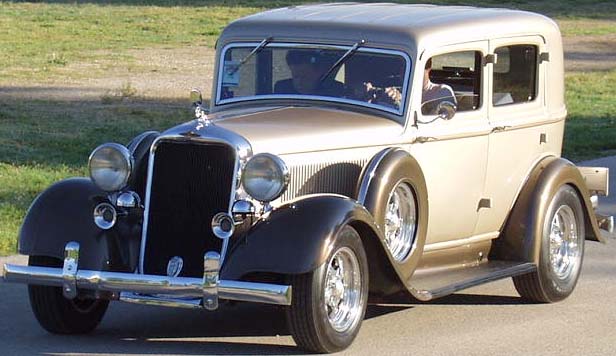
1933dodgeI saw an antique car in a parking lot today.  Just quickly browsing on the internet, it looked like an American model from the early 1930’s (like this 1933 Dodge photo I found on carnut.com).

I started to wonder what it would take to make a car like that road-ready based on today’s standards.  How much of the car was original, and how much was reconstructed using today’s technology and materials?  Had there been any upgrades to the engine or exhaust, and did it have any hidden but modern features such as air conditioning or a CD player?  Did it even have seat belts or any other more modern safety features?

When building an existing organization for the future, we can ask ourselves similar questions.

  • What features of the improved organization should be recognizable as the same organization?
  • Which aspects do we need to retain to stay true to our purpose and values?
  • What parts can we rebuild with new technology and new ideas?
  • How do we remain flexible with an eye toward the future?
  • What should be overhauled, replaced or augmented based on what we now know works?
  • What is required based on new or foreseen standards?
  • Do you need to do maintenance, or restoration?

The 76-year-old car I saw was well-kept and shiny.  When the owner arrived, it started right up and he drove away.

How might you make your organization road-ready for the future?

Here’s another exercise, because metaphors are incredibly useful for thinking about your organization (or anything else) in new ways, and discovering ideas and insights that might otherwise be left undiscovered.

Take a look at the picture of the antique car and ascribe parts of the car to features of your organization, department, process, etc.  Then use that association to consider the questions above.  Take the headlamps as an example:

What do the headlamps represent?  Our strategic planning process.

What is required based on new or foreseen standards?  The lights need to be brighter than before.  So we can see the road clearly, plus what is not on the road but headed straight for us.

What parts can we rebuild with new technology and new ideas?  The amount of information available to us is increasing.  We need a better way to process it all and make sense of it.

You get the idea.

A common picture of the ideal organization

May 18, 2009

Even though organizations have different purposes and strategies, I think we tend to have a common picture of the ideal characteristics of an effective organization. I wonder if these are the things you are trying to bring about in your organization:

  • Multi-directional trust (leadership, employees, peers)
  • Transparency and feedback
  • Ample, clear, compelling, consistent communication
  • High-performing teams
  • Data-based decisions
  • Accountability to results
  • Clarity of vision
  • Congruence of personal work with organizational goals
  • Alignment between business units and departments
  • Breakdown of silos, turf wars, and self-protection
  • Atmosphere of mutual respect
  • Employee engagement
  • The idea of a “well-oiled machine”, efficient standardized processes
  • Effective, value-added meetings

I would love to hear what else you might add to this list, and if any of these would actually decrease your success.  Please share using the comments.

The Why of change

May 14, 2009

In conversations, I often relate the task of implementing change to rolling a boulder uphill, or banging your head against the wall.  Having been in that role, I know it often can feel that way.

Looking through past posts and articles, I realize I generally focus on the How of change, whether it’s methodologies, or what to think about, or how you can build up your own capacity to bring about change.  These are all important things, considering what a formidable task change can be, but they are the means, not the ends.

I don’t want to lose sight of the fact that there is a reason for change, which generally is to bring about a better future.  It’s the Why of change, the hope of eventual improvement, that drives you to continue and gives you the energy to take on the challenges and resistance.  It’s the Why of change that tells you which obstacles must be overcome.  It’s the Why of change that compels others to help you get it done.

So, when you feel like you’re banging your head against the wall, stop and reground yourself in the reason you’ve taken on the challenge in the first place.  Clarify the purpose, reaffirm your hope, and adjust the path to get there if necessary.

What is your Why?


Five Enemies of Unity

February 18, 2009

A friend of mine sent out a message on Twitter today, listing the Five Enemies of Unity, which had been discussed in a team meeting.  The source is Dave Ramsey, a talk radio host who also hosts a conference called EntreLeadership. Follow the link to “Free Report” to download a pdf called “Avoiding the Five Enemies of Unity.”

According to Ramsey, the Five Enemies of Unity are:

  1. Poor communication
  2. Gossip
  3. Unresolved disagreements
  4. Lack of a shared purpose
  5. Sanctioned incompetence

The concept of unity strikes me as more than teamwork.  It’s about being a cohesive group with shared objectives and mutual respect.  Unity is something to strive for as the foundation for organizational change.  Can you imagine the laser focus your organization could have if these five items were eliminated?

Inquiry:  What are the enemies of unity in your organization?

I would love to hear your thoughts.  Please add a comment to this post.

Eight Fundamental Ingredients Of A Successful Change Initiative

August 20, 2008

Organizational change is a complicated endeavor. The forces at work that continue the status quo are formidable, but not impossible to overcome. Set yourself up for success by laying the foundation with these eight fundamentals. Read more

Hear the latest episode of The Change Agent’s Dilemma:

Let’s Connect!

Follow me on TwitterConnect on LinkedInBecome a Fan on FacebookEmail me

Free 30-Page Workbook!

Sign up for the monthly newsletter and get the Change Starts Here Workbook!
Email
First Name
Last Name
See preview. View the privacy policy.